
Bundibugyo: The Ebola Strain With No Vaccine — What to Know in 2026
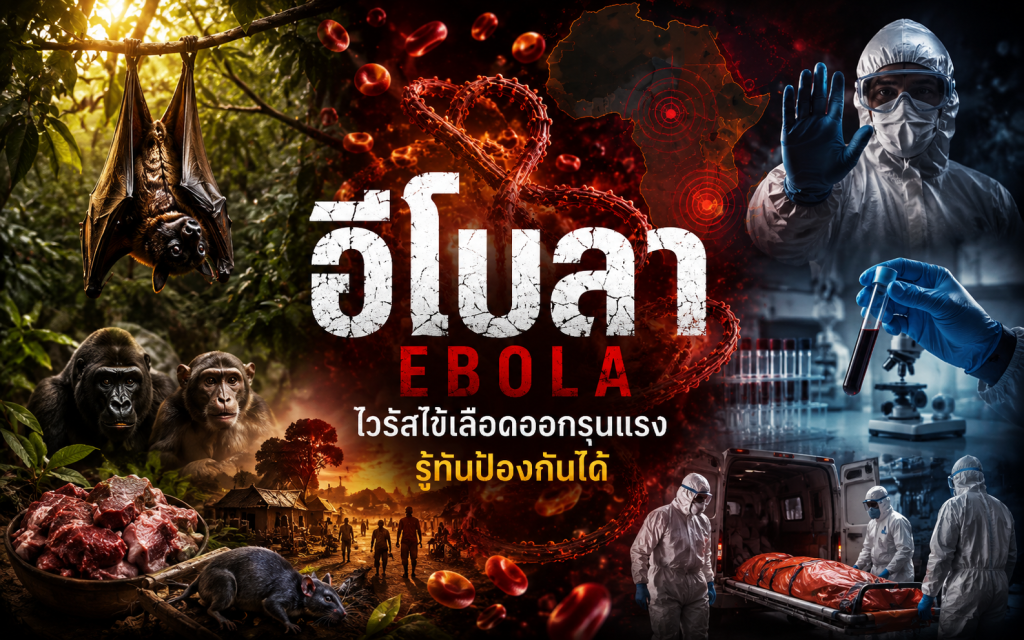
Ebola is a virus that causes a severe hemorrhagic fever with a high fatality rate. This article summarizes everything from where the virus came from, its different species, its natural reservoir, and its symptoms, through to diagnosis and treatment.
The Latest Situation
As of early June 2026, an Ebola outbreak is underway in the Democratic Republic of the Congo (DRC), centered in Ituri Province and spreading across the border into Uganda. The World Health Organization (WHO) declared it a Public Health Emergency of International Concern (PHEIC) on 17 May 2026. What makes this round different from previous ones is that it is caused by the rare Bundibugyo species, for which there is still no licensed vaccine or specific treatment.
The Origin of Ebola: Where Did It Come From?
Ebola was first identified in 1976 during two simultaneous outbreaks: one in the village of Yambuku, in what is now the DRC, and another in the town of Nzara, in Sudan. The name “Ebola” comes from the Ebola River, located near the first outbreak site in the DRC.
Since then, outbreaks have occurred periodically across Central and West Africa. The largest in history was the West Africa epidemic of 2014–2016 (Guinea, Sierra Leone, and Liberia), which killed more than 11,000 people.
The Natural Reservoir: Where Does the Virus Hide?
The natural reservoir of Ebola is believed to be fruit bats of the Pteropodidae family. These bats can carry the virus without becoming ill, making them a standing reservoir that periodically releases the virus into other animals and humans.
That said, scientists have not been able to prove the exact reservoir with 100% certainty — thousands of animals have been tested without clearly isolating live virus directly from bats. The virus jumps into humans (zoonotic spillover) through contact with infected animals, such as:
- Contact with bats or contaminated bat droppings
- Butchering or eating bushmeat, especially monkeys and apes
- Contact with the carcasses of wild animals that died from infection, such as gorillas and chimpanzees
Monkeys and apes (non-human primates) are “victims” that become infected like humans rather than a permanent reservoir, so they are considered incidental hosts rather than a virus store.
Ebola Species and Their Differences
Ebola belongs to the Orthoebolavirus group, which has six species in total. Four can cause disease in humans; the other two have not been clearly shown to cause human disease:
- Zaire ebolavirus — the most common and most severe. Fatality rates have reached as high as 90%. It caused the major 2014–2016 epidemic and is the species that now has both a vaccine and treatments.
- Sudan virus — also causes severe disease; still no licensed vaccine or treatment.
- Bundibugyo virus — rare, with a fatality rate of roughly 25–50%. It is the cause of the 2026 outbreak and currently has no specific vaccine or treatment.
- Taï Forest virus — very rare, with only a handful of reported human cases.
The remaining two species are Reston virus (does not cause illness in humans) and Bombali virus (found in bats in Sierra Leone in 2018; not yet known whether it causes disease in humans).
The main differences between the species lie in their severity and fatality rates.
At present, the available vaccine and treatments work only against the Zaire species and do not cover the others.
Symptoms
The incubation period is about 2–21 days after exposure. A key point is that an infected person does not spread the virus during incubation — transmission is only possible once symptoms have begun.
Symptoms typically come in two phases:
- Early phase (flu-like): high fever, severe fatigue, muscle pain, headache, and sore throat.
- Severe phase: vomiting, diarrhea, rash, impaired liver and kidney function, and in some cases abnormal internal and external bleeding (hence “hemorrhagic fever”).
Transmission
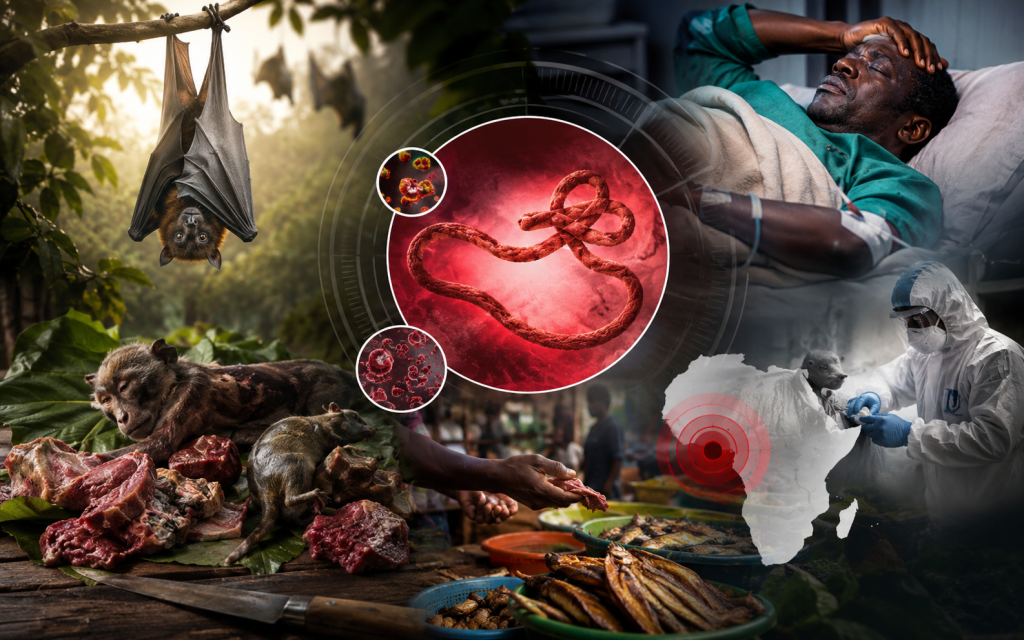
A common misconception: Ebola is not a respiratory virus, so it does not spread through the air the way a cold or COVID does. It spreads mainly through direct contact, including:
- Contact with the blood or bodily fluids of a patient (saliva, vomit, feces, urine, sweat, breast milk, etc.) — from both the sick and the deceased
- Contact with surfaces or objects contaminated with the virus, including reused needles
- Handling of bodies and traditional burial rites, which are a very important route — hence the need for “safe burials”
- The virus can persist in the semen of survivors for several months, so transmission through sexual contact is possible
Diagnosis and Testing
Early diagnosis is difficult because the symptoms resemble other diseases common in the tropics, such as malaria and typhoid fever. Confirmation therefore requires laboratory testing. The main methods are:
- RT-PCR — the standard method, detecting the virus’s genetic material (RNA); accurate and used to confirm infection.
- Antigen-detection (ELISA) — detects viral proteins; useful for rapid screening.
- Antibody tests (IgM/IgG) — detect immune response; suited to later testing or epidemiological study.
An important caveat: PCR test kits must be species-specific.
In the 2026 outbreak, early patient samples returned negative because the kits could only detect the Zaire species — so confirming the Bundibugyo species was delayed, since it is a different species.
Treatment
The cornerstone of treatment is early supportive care — for example, replacing fluids and electrolytes, maintaining blood pressure, and treating symptoms — which significantly improves survival even without a specific drug.
For the Zaire species, there are two approved, WHO-recommended treatments. Both are monoclonal antibodies that work by blocking the virus from entering cells:
- Inmazeb (atoltivimab/maftivimab/odesivimab) — a combination of three antibodies; approved by the FDA in October 2020.
- Ebanga (ansuvimab) — a single antibody; approved in December 2020.
Both work best when given early, at the first signs of illness.
A key limitation, however, is that their efficacy has only been proven for the Zaire species — they are not yet approved for the Sudan or Bundibugyo species. This is why responding to the 2026 outbreak requires urgently developing new vaccines and drugs alongside traditional public health measures.
Key Takeaways
- Ebola is a severe hemorrhagic-fever virus, first identified in 1976 and named after the Ebola River in the DRC.
- Its natural reservoir is believed to be fruit bats, and it enters humans through contact with infected animals or bushmeat.
- There are six species in total; four can cause human disease, with Zaire the most severe and most common. The 2026 outbreak is caused by the Bundibugyo species.
- It spreads through direct contact with blood and bodily fluids — not through the air — and only once symptoms have appeared.
- Diagnosis is confirmed mainly by RT-PCR, but the test kit must be species-specific.
- Treatment rests on supportive care, together with antibody drugs (Inmazeb, Ebanga) that work only against the Zaire species.
Primary sources: World Health Organization (WHO), U.S. Centers for Disease Control and Prevention (CDC), U.S. Food and Drug Administration (FDA), GOV.UK, MSF, and academic journals — information as of early June 2026.